Hocket
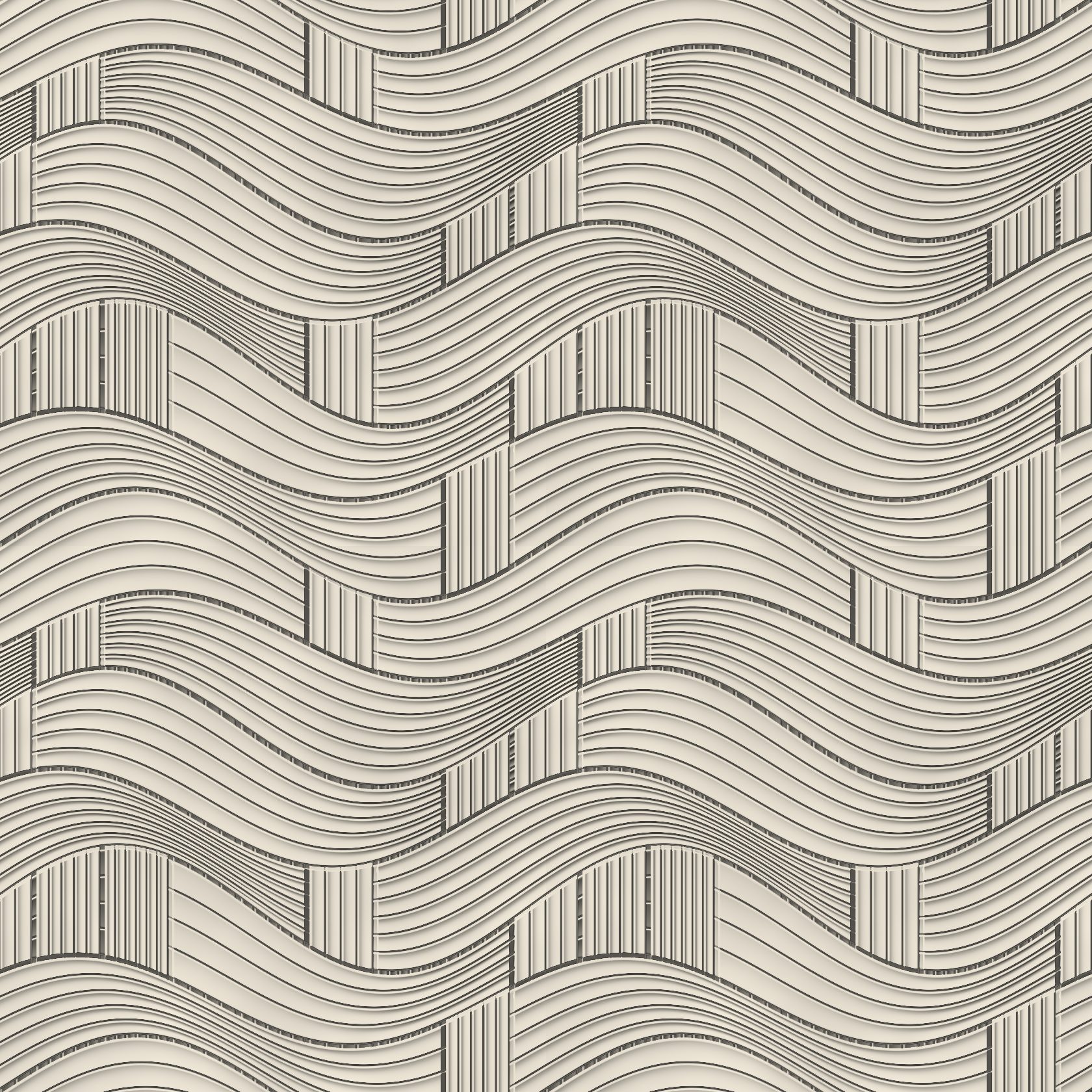
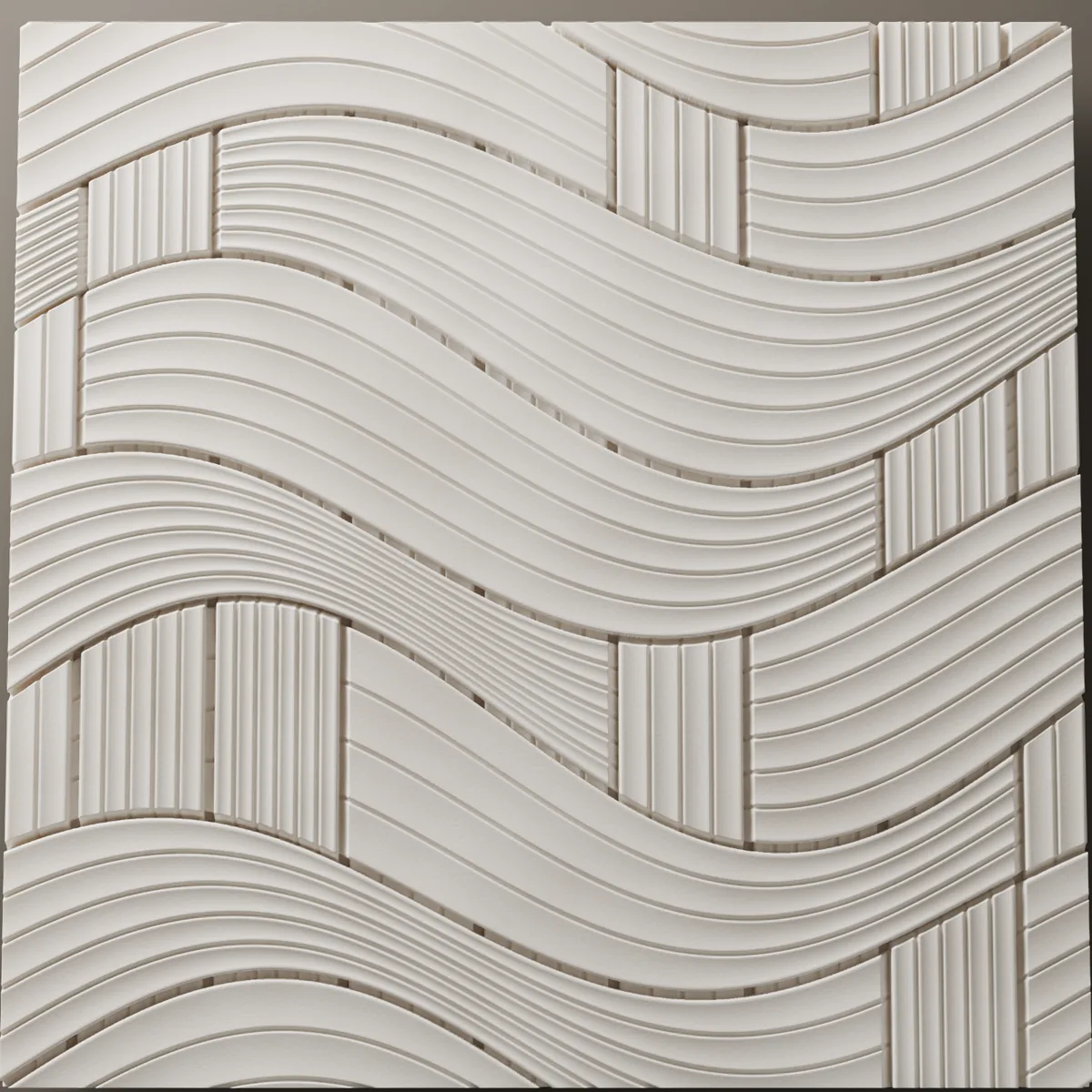
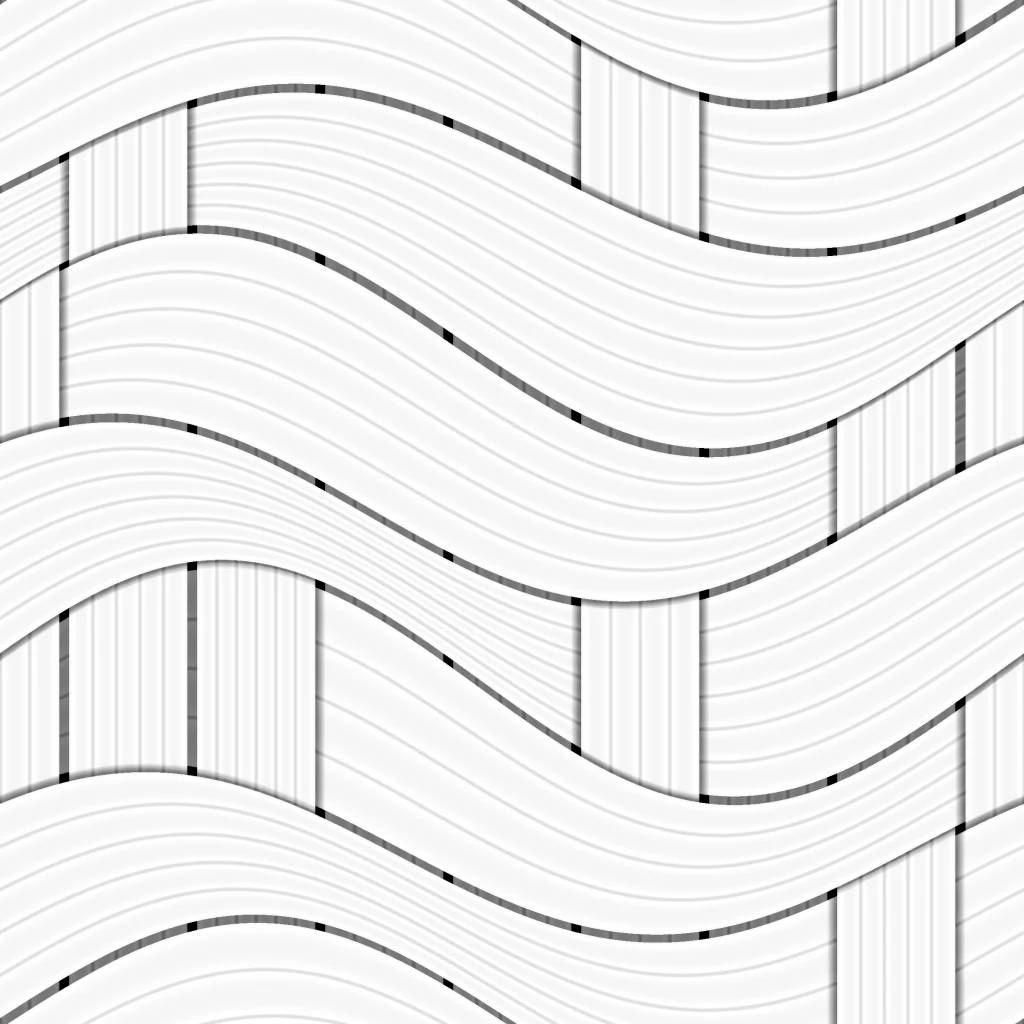
We wove waving horizontal bands through straight upright ones. Each waving band rides over several upright bands, then dips under for a short stretch, and the surface reads like a closely woven cloth.
- Size
- 600 × 600 mm
- Relief
- 16 mm
- Layout
- Continuous field
- Material
- Lumina PMAG™ (polymer-modified composite gypsum)
- Surface
- Paint-ready
- Fixing
- Polymer adhesive + bottom ledger
- Lead time
- 4 weeks after contract and advance (up to 50 m²), ex-works Sapanca (EXW)
- Minimum order
- 5 m²
The pattern
A hocket is a medieval way of splitting a melody between two voices, one falling silent as the other comes in. The bands of Hocket take turns in the same way: a waving band runs over five to seven upright bands, dips under one to three, and comes back to the surface.
Fine grooves split every band into strips; the waving bands are 100 mm wide, the upright ones 75 mm. The waving bands narrow and widen along their run, so no band keeps the same width for long. The relief reaches 16 mm.
How it reads in light
On the image at the top of the page the light follows your cursor on a computer and moves as you scroll on a phone. With the light at the side, the edge of each band on top throws a shadow onto the band beneath and the weave gains depth, while the fine grooves pick up the light as close-set lines. As the light turns head-on the shadows shorten and the weave softens into texture.
On the wall
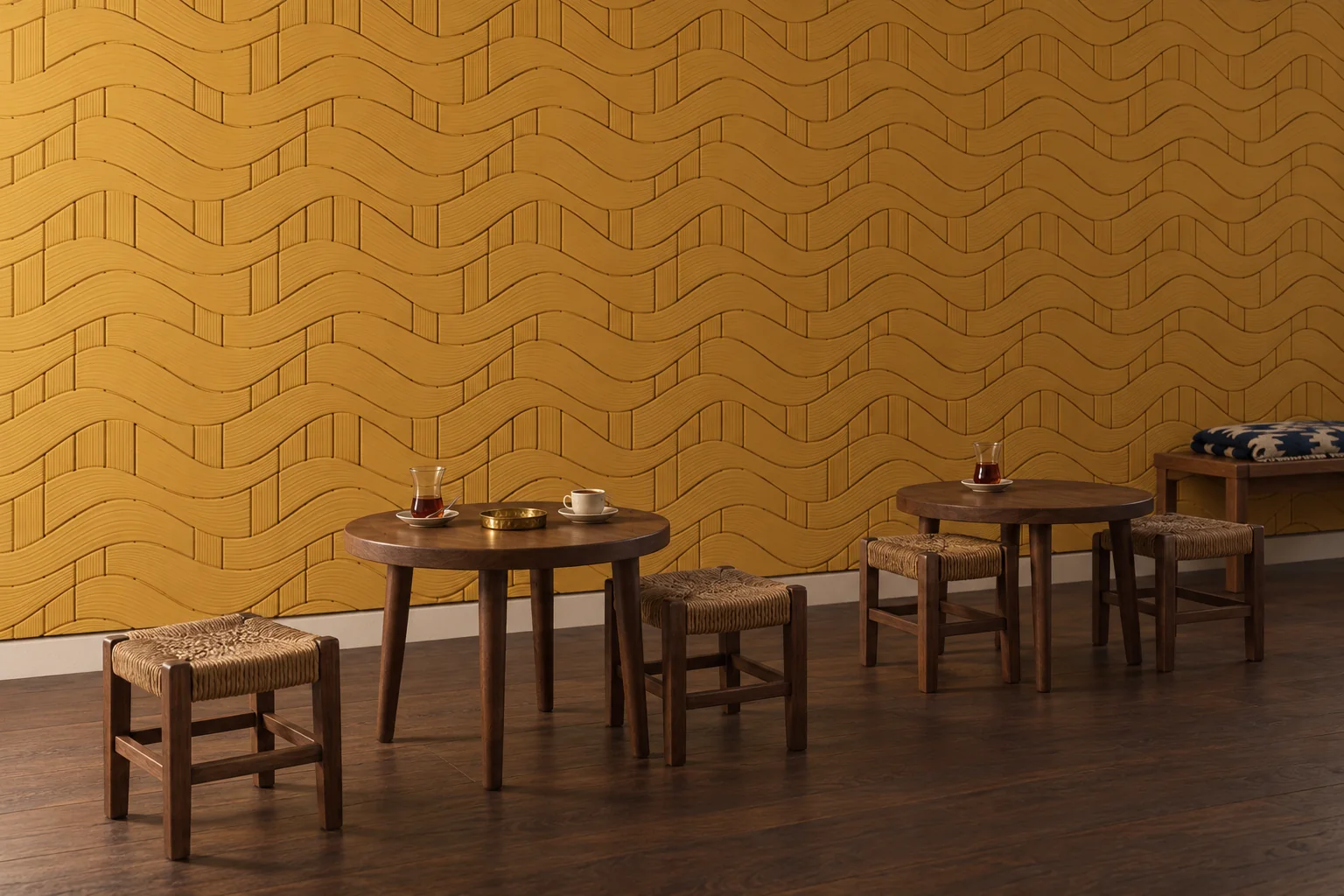
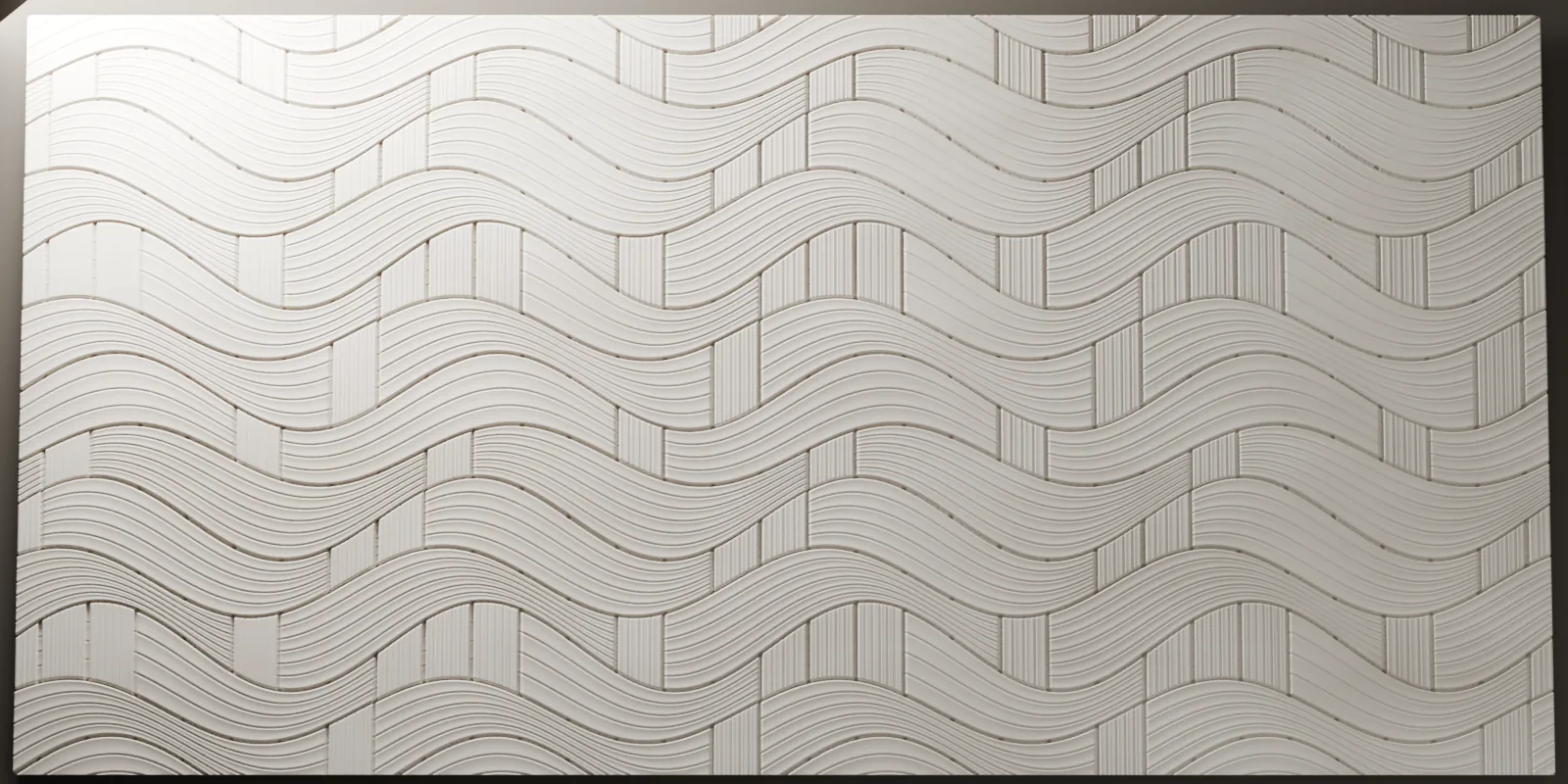
Hocket is designed as a 600 × 600 mm panel. The weave is not cut at the panel edges: laid side by side and stacked, the bands pass from one panel into the next and the wall reads as a single surface. Where the pattern is cut at the edges of the wall is set out on the layout drawing.
Where it works
Hocket’s pattern is a texture rather than a motif, so it can fill a broad wall on its own. In raking light the bands on top cast shadows onto the bands beneath and the weave gains depth; in head-on light the shadows shorten and the weave softens into an even texture. Pieces come paint-ready and can be painted on site to match the room.
Frequently asked questions
What size are Hocket panels, and how are they laid?
Hocket is designed as a 600 × 600 mm relief wall panel. The wavy bands are 100 mm wide and the vertical bands 75 mm; a wavy band passes over five to seven vertical bands, then dips under one to three. The weave runs continuous across the panel joints and the wall reads as one closely woven surface. The layout drawing sets where the pattern is cut at the edges of the wall.
How deep is the Hocket relief?
The relief reaches 16 mm, and fine grooves split each band into several strands, so the surface catches the light in close lines.
What is the lead time for Hocket, and how is it fixed?
Lead time is 4 weeks after contract and advance for orders up to 50 m²; for larger orders the quote sets the date. Delivery is ex-works Sapanca (EXW). Pieces are hand-cast in Lumina PMAG™ — Polymer Modified Composite Gypsum and fixed to the wall with a polymer adhesive, or with a rail system on metal stud and plasterboard walls. Pieces that wrap a column, turn a corner or follow a curved wall are cast as Bespoke, in the same motif. The minimum order is 5 m². The mould is made for your order and you approve the master before casting; both are included in the 4 weeks. The bottom course sits on a fixed ledger and each course stands on the one below; the wall surface is checked before fixing.
To see how this design would sit on your wall, send the wall dimensions.
Column faces and outside corners are worked out on the layout drawing. Pieces that wrap a column, turn a corner or follow a curved wall are cast as Bespoke, in the same motif, and such a wall follows the Bespoke programme.